There is something about a naturally aspirated engine at full throttle that no amount of turbocharging, supercharging, or electrification can replicate. It is not simply a matter of sound, though the sound is a significant part of it. It is the directness of the connection between the driver's right foot and the engine's response, the linear, predictable, perfectly proportional relationship between throttle input and power output. A turbocharged engine, however responsive, always interposes a brief moment of calculation between demand and delivery. A naturally aspirated engine simply does what you ask, instantly and completely, with a mechanical honesty that is becoming vanishingly rare.
This is a celebration of ten engines that represent the absolute pinnacle of naturally aspirated engineering, machines that achieved their power, their character, and their immortality through the purity of their design rather than the assistance of forced induction. They span seven decades and four continents, and they share one defining quality: each of them transformed the car it powered from mere transportation into something approaching art.
The Ferrari Colombo V12, in its various displacements from 1.5 to 3.3 liters, is where any serious discussion of great engines must begin. Designed by Gioacchino Colombo in 1947, this short-stroke, high-revving twelve-cylinder established the template for every Ferrari engine that followed. Its architecture, a 60-degree V12 with single overhead camshafts per bank, was elegant in its simplicity and remarkably adaptable. In 250 GT form, producing approximately 240 horsepower from three liters, it combined muscular mid-range torque with a willingness to rev that was extraordinary for its era.
"A great naturally aspirated engine doesn't just produce power. It produces a narrative. There is a beginning, a middle, and a climax, and the driver is the author of every chapter."
The Colombo V12's sound is inseparable from its legend. At idle, it burbles with a cultured irregularity that speaks of twelve individual cylinders finding their collective rhythm. Under load, it hardens into a metallic wail that rises in pitch and intensity until, at the redline, it produces a shriek of such purity and emotion that grown men have been known to weep. This is not hyperbole. The Colombo V12 is, quite simply, one of the most beautiful-sounding mechanical devices ever created by human hands.
The Porsche Mezger flat-six, named for its designer Hans Mezger, is the Colombo's philosophical opposite: where the Ferrari is passionate and theatrical, the Porsche is precise and methodical. But the end result is no less extraordinary. Developed originally for the 911 GT1 racing program and later adapted for the road-going 996 and 997 GT3, the Mezger engine is a masterpiece of reliability and performance. In its ultimate GT3 RS 4.0 form, producing 500 horsepower from four liters without any form of forced induction, it achieves a specific output that borders on the miraculous.
The Mezger's character is defined by its willingness to rev. Where most engines begin to feel strained as they approach their limits, the Mezger seems to come alive, gaining urgency and intensity with every additional hundred revolutions per minute. The final thousand rpm before the 8,250-rpm redline of the 4.0-liter version is an experience of pure, undiluted mechanical ecstasy, a sensation of being connected to a machine that is operating at the absolute limit of its capabilities and loving every moment of it.
The BMW S85 V10, which powered the E60 M5 and E63 M6, is the most controversial entry on this list and also one of the most compelling. Derived from the engine that powered BMW's Formula 1 program, the S85 is a 5.0-liter, forty-valve V10 that produces 507 horsepower and revs to an astonishing 8,250 rpm. Its sound, a high-pitched, almost metallic scream that bears little resemblance to any other road car engine, is unmistakably derived from single-seater racing.
The Honda F20C, which powered the S2000, deserves recognition as perhaps the greatest four-cylinder engine ever produced. From just two liters of displacement, Honda extracted 240 horsepower, a specific output of 120 horsepower per liter, achieved without any forced induction. The F20C's secret was its VTEC variable valve timing system, which effectively gave the engine two distinct personalities: a docile, economical character below 6,000 rpm, and a ferocious, free-revving screamer above it. The transition between the two, marked by a perceptible hardening of the exhaust note and a sudden surge of additional power, is one of the most thrilling sensations in all of motoring.
The Lexus 1LR-GUE, the 4.8-liter V10 that powered the LFA, is an engine so extraordinary that it justifies the existence of the car around it. Co-developed with Yamaha, the 1LR-GUE produces 553 horsepower at 8,700 rpm and revs so quickly that Lexus had to fit a digital tachometer because a conventional analog needle could not keep pace. Its sound, a complex, harmonically rich wail that has been compared to everything from a Formula 1 car to an orchestra tuning up, is among the most distinctive and emotionally stirring in automotive history.
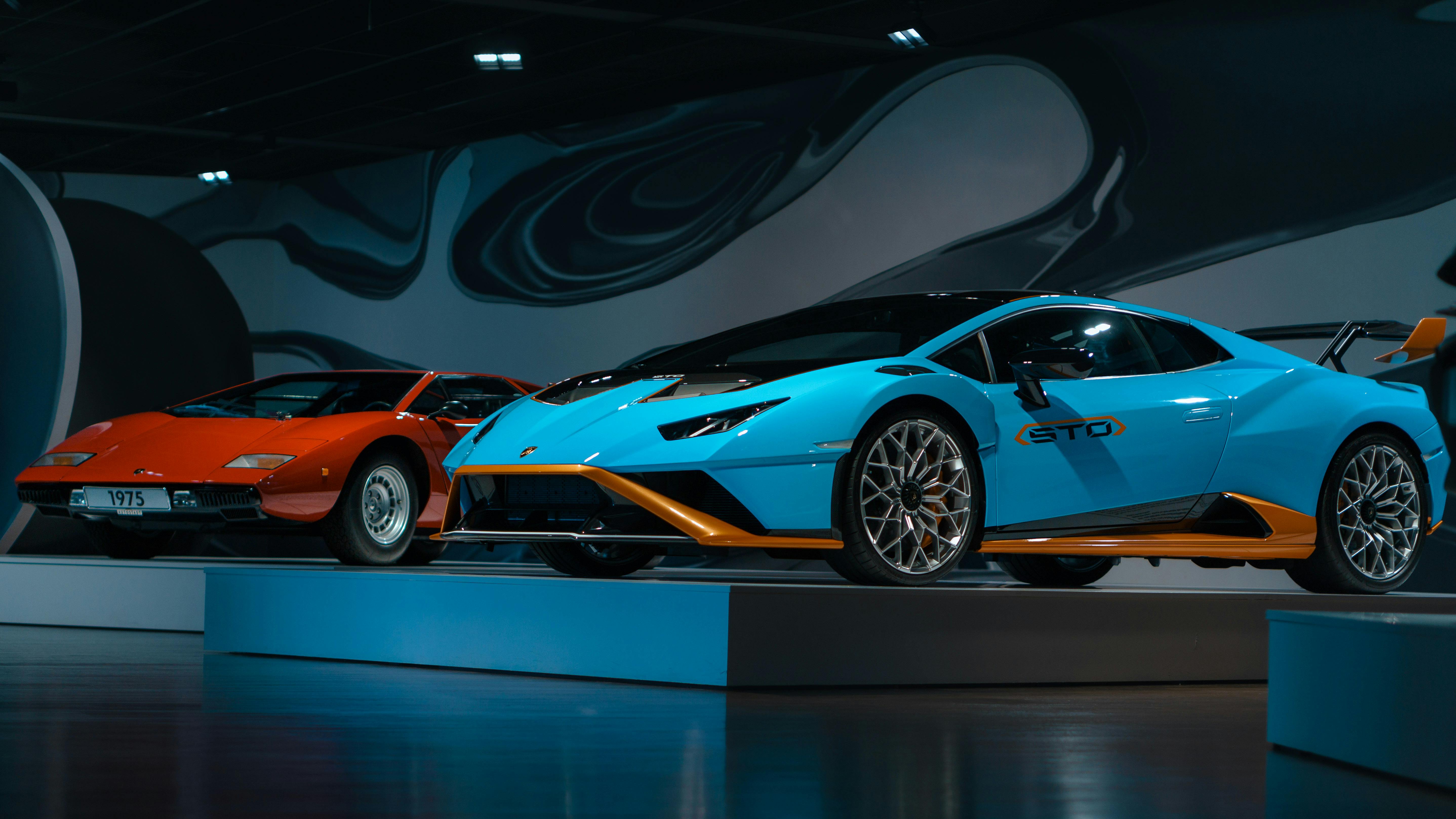
The Lamborghini L539 V12, the 6.5-liter naturally aspirated engine that powers the Aventador and its derivatives, represents the last stand of the large-displacement, naturally aspirated supercar engine. Producing up to 770 horsepower in Ultimae specification, the L539 is proof that displacement, properly managed, remains the most effective way to produce both power and drama. Its sound, a deep, thunderous bellow at low rpm that transforms into a savage, tearing roar at full throttle, is perhaps the most viscerally exciting engine note produced by any current production car.
The Carrera GT's V10, displaced at 5.7 liters and producing 612 horsepower, earns its place through sheer emotional impact. Derived from a stillborn Le Mans prototype engine, it delivers its power with a linearity and a mechanical urgency that no turbocharged engine can match. The intake sound alone, a complex, multi-layered howl that changes character with every hundred rpm, is worth the price of the car.
What unites these engines, beyond their refusal to rely on forced induction, is their ability to create a narrative arc within a single gear. Each one tells a story as the tachometer sweeps from idle to redline: a story of gathering intensity, of mechanical systems working in ever-more-perfect harmony, of energy being converted into motion with an efficiency and a beauty that transcends mere engineering. These are not just power sources. They are instruments, and in the hands of a skilled driver, they produce music.
The age of the great naturally aspirated engine is drawing to a close. Emissions regulations, efficiency targets, and the relentless march of electrification are conspiring to make these engines commercially and environmentally untenable. Within a decade, it is likely that no major manufacturer will produce a naturally aspirated engine of significant power. When that day comes, the engines on this list, and the cars they powered, will stand as monuments to an era when the internal combustion engine was not merely a means of propulsion but a source of profound emotional connection. We will not see their like again.